Russell Pickett
Turtles All the Way DownRussell Pickett, the billionaire founder of Pickett Engineering, is an absent but consequential figure: his disappearance before a police raid entangles a corruption investigation with the precarious lives of his sons and the extraordinary terms of his will. As the search unfolds, the public record offers a physical description and a timeline, while his family’s accounts disclose a man whose pursuit of a scientific answer to death has shaped both his estate and his sons’ expectations of him.
Identity and Background
Pickett is identified as the controversial founder and chief executive of Pickett Engineering, an Indianapolis-based construction firm employing more than ten thousand people worldwide. A report of a $100,000 reward for information about his whereabouts says he disappeared the night before police raided his home in connection with a fraud and bribery investigation. He was last seen at his riverside compound on September 8. The Indianapolis Star later reported that a search warrant had been served while he was away and that neither his lawyer nor investigators had information about where he had gone; no activity had been recorded on his credit cards or bank accounts after the evening before the raid.
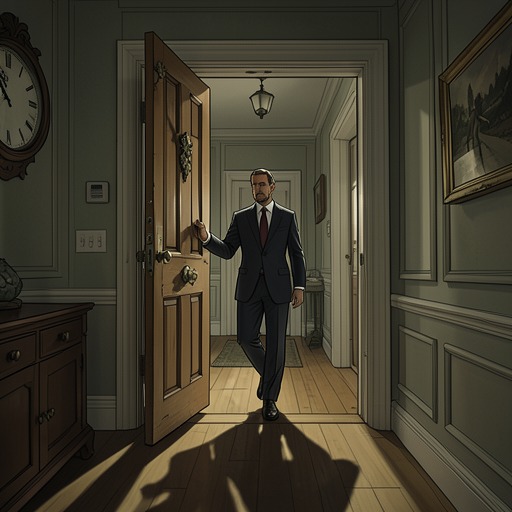
The missing-person report gives him a specific, bodily presence amid the uncertainty: he was fifty-three, six feet tall, approximately 220 pounds, gray-haired and blue-eyed. It records three small abdominal scars from gallbladder surgery and a tattoo on his left shoulder blade reading Nolite te bastardes carborundorum. When he was last seen, he was wearing a horizontally striped navy-and-white nightshirt and light-blue boxer shorts. These details make the search concrete, but they do not explain the central mystery of his disappearance.
Disappearance and the Search
Pickett was discovered missing at 5:35 a.m., when police raided his house. The report contains many witness statements, but, as Aza learns, almost none of those witnesses had seen him that night; only his sons, Davis Pickett and Noah Pickett, were home. The front-gate camera recorded two groundskeepers leaving at 5:40 p.m. Malik, the zoologist, left at 5:52, followed by Lyle at 6:02 and Rosa at 6:04. Their departures support the account that there was no nighttime staff at the compound, while the lack of other witnesses leaves the sons’ last sighting especially important.
The case is framed publicly as a search for a missing executive, but the investigation into his company gives the disappearance a second meaning. Pickett vanished just before police arrived to investigate suspected fraud and bribery. Davis later describes his father as having disappeared in the middle of the night to escape prosecution. That is his son’s account of the apparent motive, not a confirmed explanation of what Pickett did or where he went.
The Will and His Sons
Pickett’s most startling public legacy is his intention to leave his entire estate to Tua, his pet tuatara. He announced that he had established a foundation to study the animal and provide for her care; after her death, the estate would pass to a trust benefiting tuatara everywhere. His interest was tied to the species’ slow aging: Davis says Pickett believed Malik could identify a factor in tuatara blood that might help him cure death, and that he hoped to be remembered as the man who accomplished it.
The inheritance plan leaves Davis and Noah with money for college and other needs, but, as Davis explains, not the fortune that might otherwise have made them rich. He does not claim that his father owed his sons wealth. What he wanted instead was ordinary parental presence: help getting Noah to school, attention to homework, and a father who did not vanish while facing prosecution. The will’s grand ambition and the small, practical absences Davis names stand in sharp contrast.
That contrast is sharpened by the boys’ legal situation. Davis has been declared an emancipated minor and is Noah’s legal guardian; the Picketts have no other relatives with whom they have a good relationship. When Aza asks who will actually look after Noah, the lawyer can answer only in legal terms: he administers Pickett’s financial affairs, the house manager handles the home, and Davis is the guardian. The assurance that everything is cared for legally does not resolve Aza’s concern about who will provide the care a child needs.
Legal Status and Discovery
The lawyer distinguishes legal death from biological death. Under Indiana law, he explains, a missing person remains legally alive until evidence of biological death emerges or seven years pass from the last evidence of life. He says he trusts that Pickett is both legally and biologically alive, while acknowledging that the law, rather than a confirmed knowledge of Pickett’s fate, is what makes his legal status certain. This waiting period holds the estate and the family’s circumstances in suspension.
That suspension affects Aza’s choices. When she considers telling Davis what she knows, she says she will not tell the police: if Pickett is dead, she fears, Davis and Noah’s home would no longer belong to them but would pass to a tuatara under the will. Her reasoning links the unanswered question of Pickett’s survival directly to the boys’ security and to the unusual inheritance provision.
After Christmas vacation, a television report says that authorities believe a body found in an offshoot of the Pogue’s Run tunnel is Pickett’s, although he has not been positively identified. Sources close to the investigation say he likely died of exposure within a few days of disappearing; the report also says police found the body after an anonymous tip. Aza immediately texts Davis to express her sorrow and then assures him that neither she nor Daisy Ramirez tipped off the police. The report brings the search toward an ending, but its cautious wording preserves a distinction between what authorities believe and what has been officially confirmed. Pickett remains central even in absence: the unresolved fate of his body determines the possible future of his estate, while the terms of that estate expose how little his sons’ legal provision can substitute for his presence.